

Located in the heart of the country, at the bend of the Carpathians and at an average altitude of 625 meters, Brașov is a magnet for both Romanian and foreign tourists. According to the latest census, ‘The City Under Tâmpa’ has nearly 250,000 inhabitants. The historic buildings, Council Square, and the panoramic view of the city from the top of Mount Tâmpa together create a unique experience for those looking to capture at least a few memorable photos.
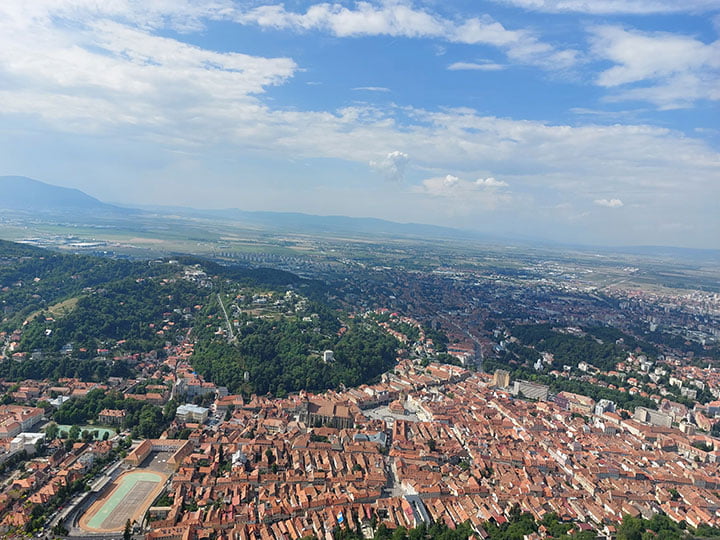
A Glimpse into History
Brașov’s history dates back to the Neolithic period. The city began to take its current shape after the Teutonic Knights settled here in 1203. The origin of Brașov’s name is still debated. Some historians believe it comes from the city’s fortress, while others think it’s named after a local river. Between 1950 and 1960, during Soviet rule, Brașov was renamed Stalin City, along with 14 other cities across Europe.
The city under Mount Tâmpa has a Romanian-Slavic name, with variations found throughout Romania: In Timiș, there were places with this name; in Neamț, there is a forest called ‘Brașovana’; and near Vaslui, there is a valley and a village called ‘Brașovenița.’ The city is also mentioned in old documents under the name ‘Corona’.
Must-Visit Tourist Attractions in Brașov
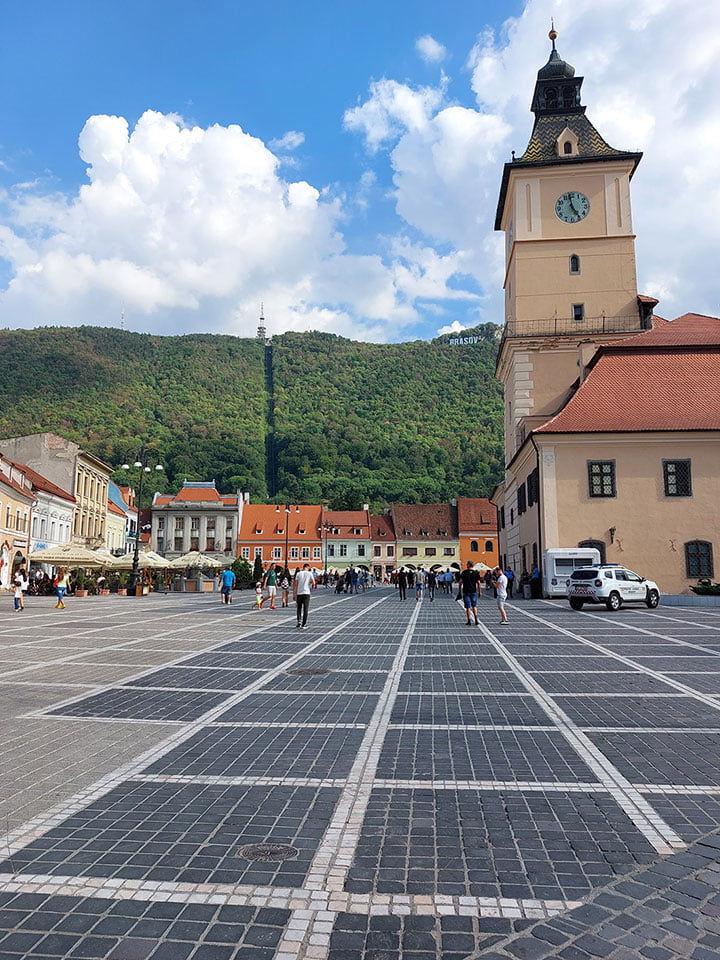
Council Square
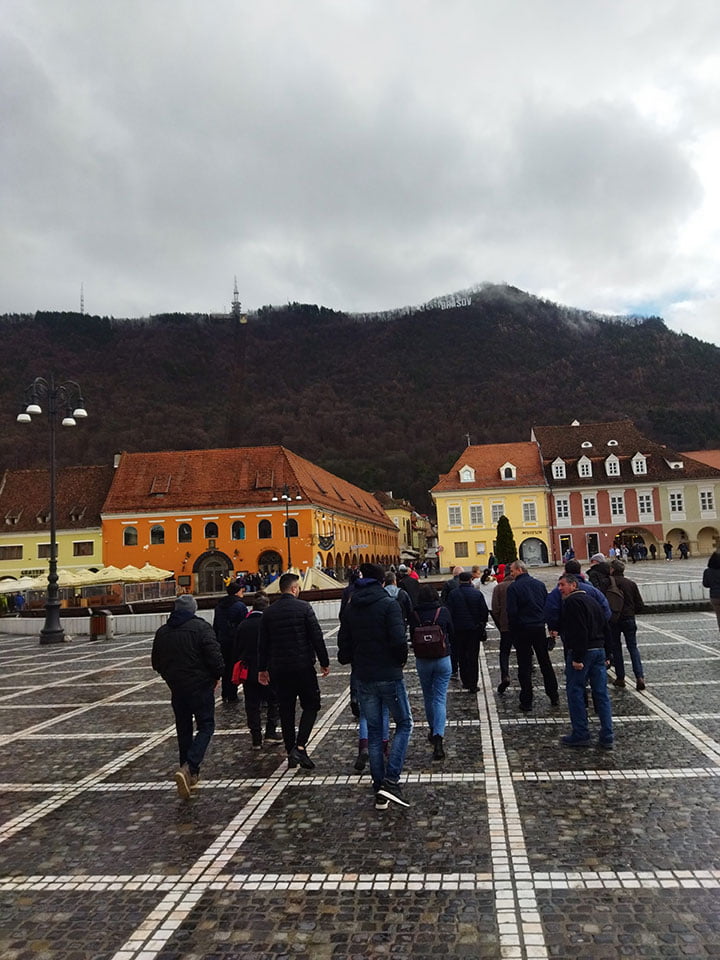
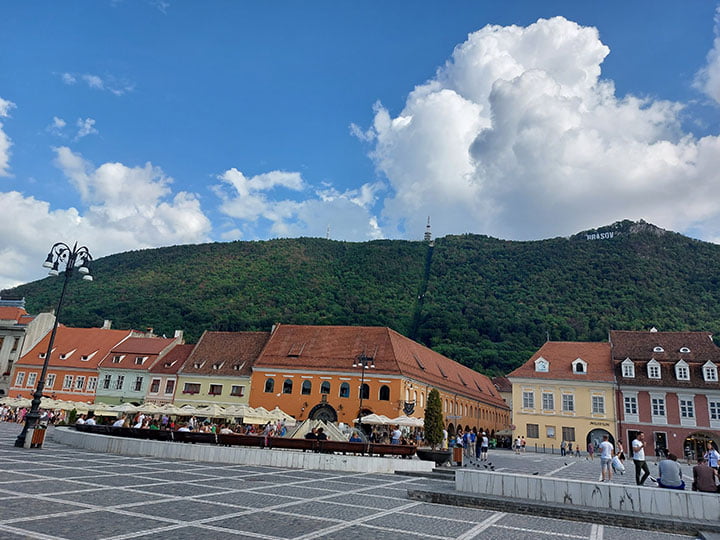
One of the main attractions in Brașov is Council Square (Piața Sfatului). In the Middle Ages, this square was the hub for merchants’ fairs. The Council House (Casa Sfatului) was where merchants displayed their goods, overseen by city officials.
The Black Church
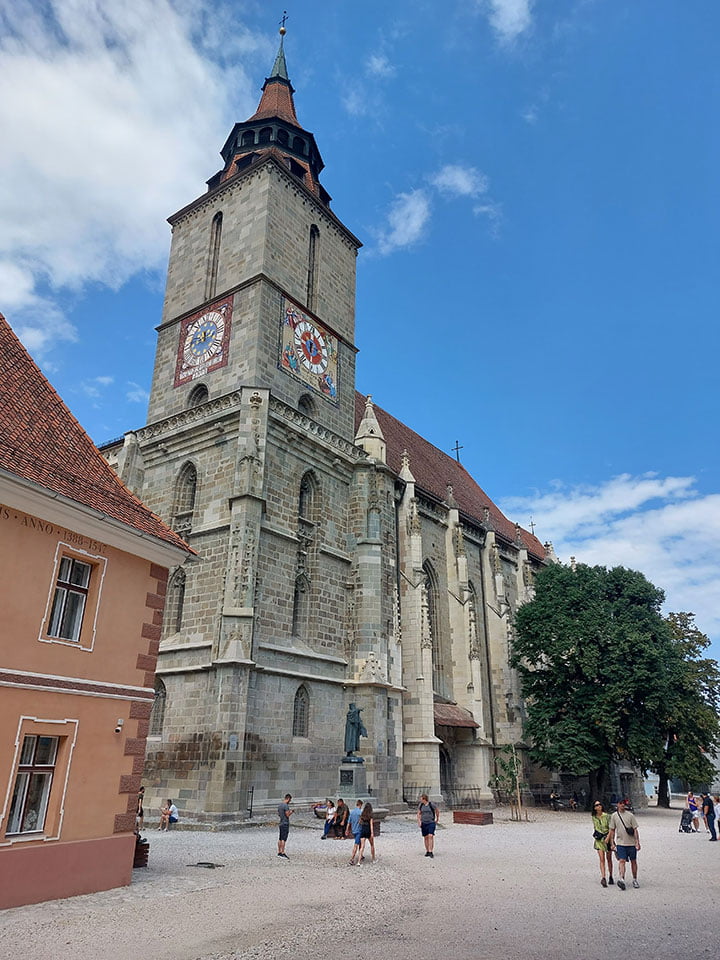
The Black Church is the ‘guardian’ of the city and one of Romania’s most notable Gothic structures, with a capacity of 5,000 people. Its construction dates back to the 14th and 15th centuries, and it was named after the fire of 1689, which blackened its walls. Standing 89 meters tall, it is the second-largest church in Romania, after the People’s Salvation Cathedral in Bucharest. Originally named the Church of ‘Saint Mary,’ this building also houses a collection of old carpets from Asia and the oldest organ in Romania.
In 1583, the First Romanian School was established in Brașov. Here, the first Romanian language classes were held, and deacon Coresi printed the first Romanian books in Transylvania. The current building, dating from 1760, is a historical monument. It houses the first Romanian printing press and a collection of over 4,000 old books and 30,000 documents. Visitors can explore several rooms in the museum, including the “Anton Pann Room” and the “Deacon Coresi Room.”
Near the Șchei Gate, you’ll find Rope Street (Strada Sforii), Europe’s narrowest street. This 80-meter passageway, dating back to the 1600s, was built to help firefighters navigate the area.
Another must-see is the White Tower (Turnul Alb), a horseshoe-shaped observation and defense tower. Built for the city’s tinsmiths and coppersmiths, the tower features battlements, pitch holes, and stone-carved balconies. It’s connected to the city walls by a drawbridge, leading to Graft Bastion. After a major fire in 1689, the tower was rebuilt in 1723.
Conclusion
Brașov is more than just a city in Romania; it’s a vibrant blend of history, culture, and natural beauty. From its medieval streets and historic landmarks to the stunning views of the Carpathians, Brașov offers something for everyone. Whether you’re a history buff, a nature lover, or simply looking for a charming destination to explore, Brașov stands out as a must-visit location in the heart of Romania. Its rich past and welcoming atmosphere make it a city that leaves a lasting impression on all who visit.